How the Simulation Engine Works
Most retirement calculators assume returns follow a bell curve and assets move independently. Both assumptions are wrong. Here is what Retirement Lab models instead - and why each choice changes your projected success rate.
How Monte Carlo Retirement Simulation Works
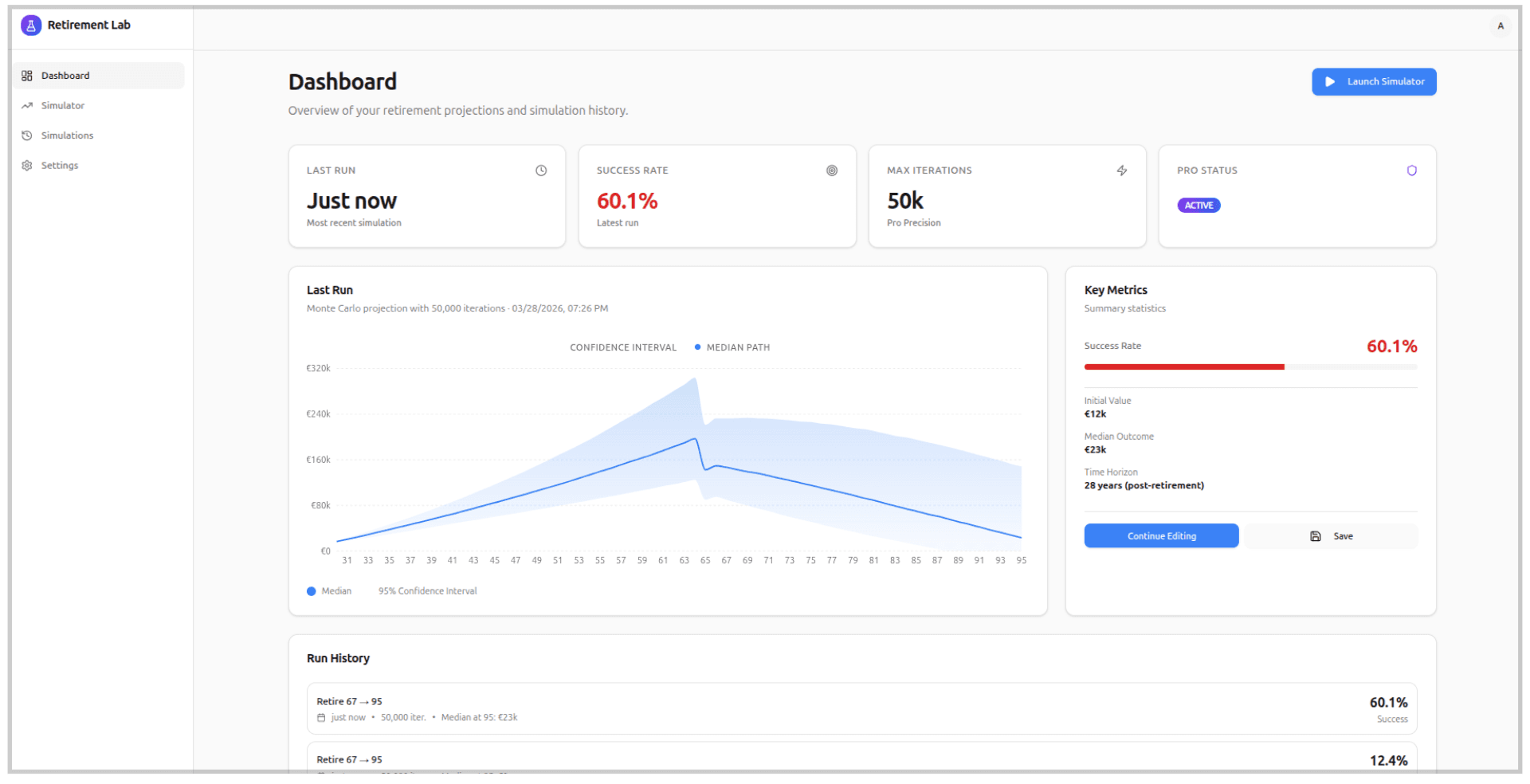
Rather than projecting a single "average" outcome, the engine runs thousands of independent scenarios - each with a different sequence of annual returns drawn from your configured distribution. The result is a probability spread: not just "will I run out of money?" but "in what percentage of futures does each outcome occur?"
Under the hood

Why Normal Distributions Underestimate Retirement Risk
The standard Monte Carlo assumption - that annual returns follow a Gaussian bell curve - dramatically understates the frequency of severe losses. Real equity markets produce 30%+ annual drops far more often than the normal distribution predicts. The Student's t-distribution corrects for this: lower degrees of freedom produce heavier tails, meaning catastrophic return sequences appear in more simulated scenarios. DOF=3 is more severe than DOF=5 - you choose based on how conservative you want the model to be.
Under the hood
Stocks, Bonds, and Alternatives Move Together - Not Independently
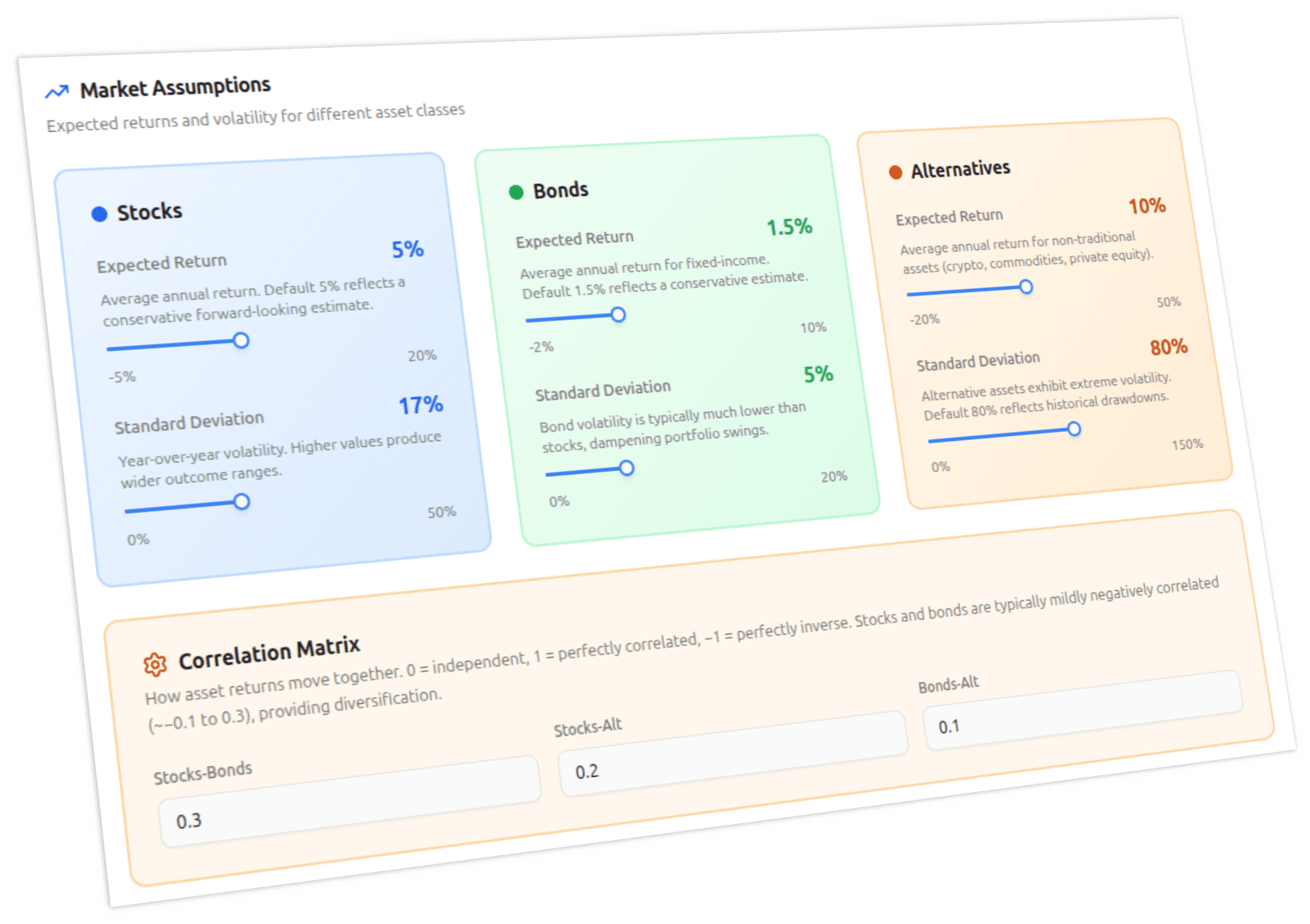
If stocks and bonds are treated as independent, a bad equity year has no statistical relationship to that year's bond return in the simulation. That fails exactly when it matters most. In 2022, stocks and long-duration bonds both fell sharply at the same time - breaking the negative correlation that 60/40 portfolios rely on for protection. In 2008, correlations across asset classes converged as investors fled to cash. These joint movements define the worst retirement sequences.
Under the hood
How You Withdraw Matters as Much as How Much You Save
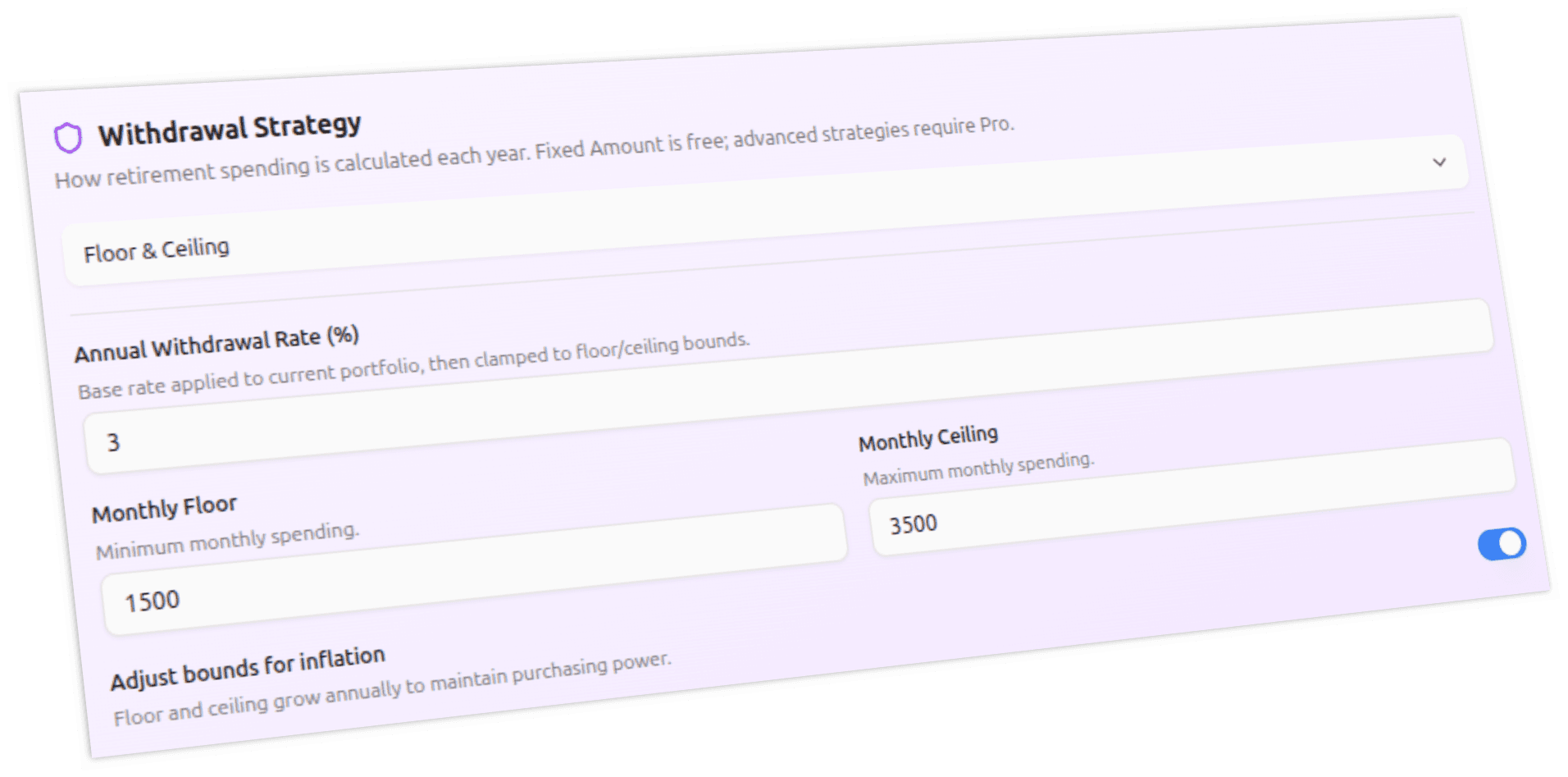
Fixed withdrawals are simple and predictable but take no account of what the market is doing. Withdrawing the same amount in year 3 of a bear market as in a bull year accelerates depletion. Dynamic strategies reduce this risk by linking spending to portfolio performance - which can improve survival rates substantially, at the cost of some income predictability in bad years.
Under the hood
Model Sudden Market Shocks at Any Point in Your Retirement
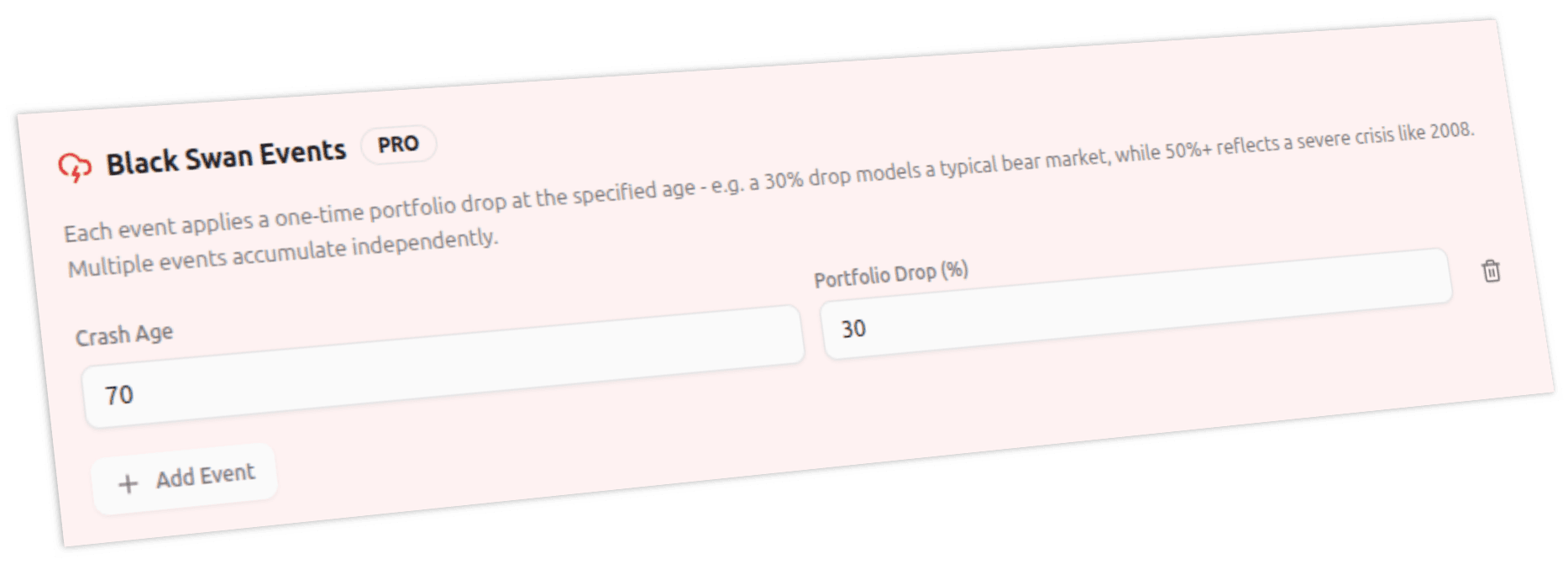
Fat-tail distributions generate extreme return sequences randomly across your scenarios. Black swan events are different: a deterministic shock at a specific age, applied to every single iteration. If you set a 35% drawdown at age 65, every simulated retirement experiences that drawdown that year - then continues from the reduced portfolio. This answers a specific question: how does my plan hold up if a major crash happens right as I retire?
Under the hood
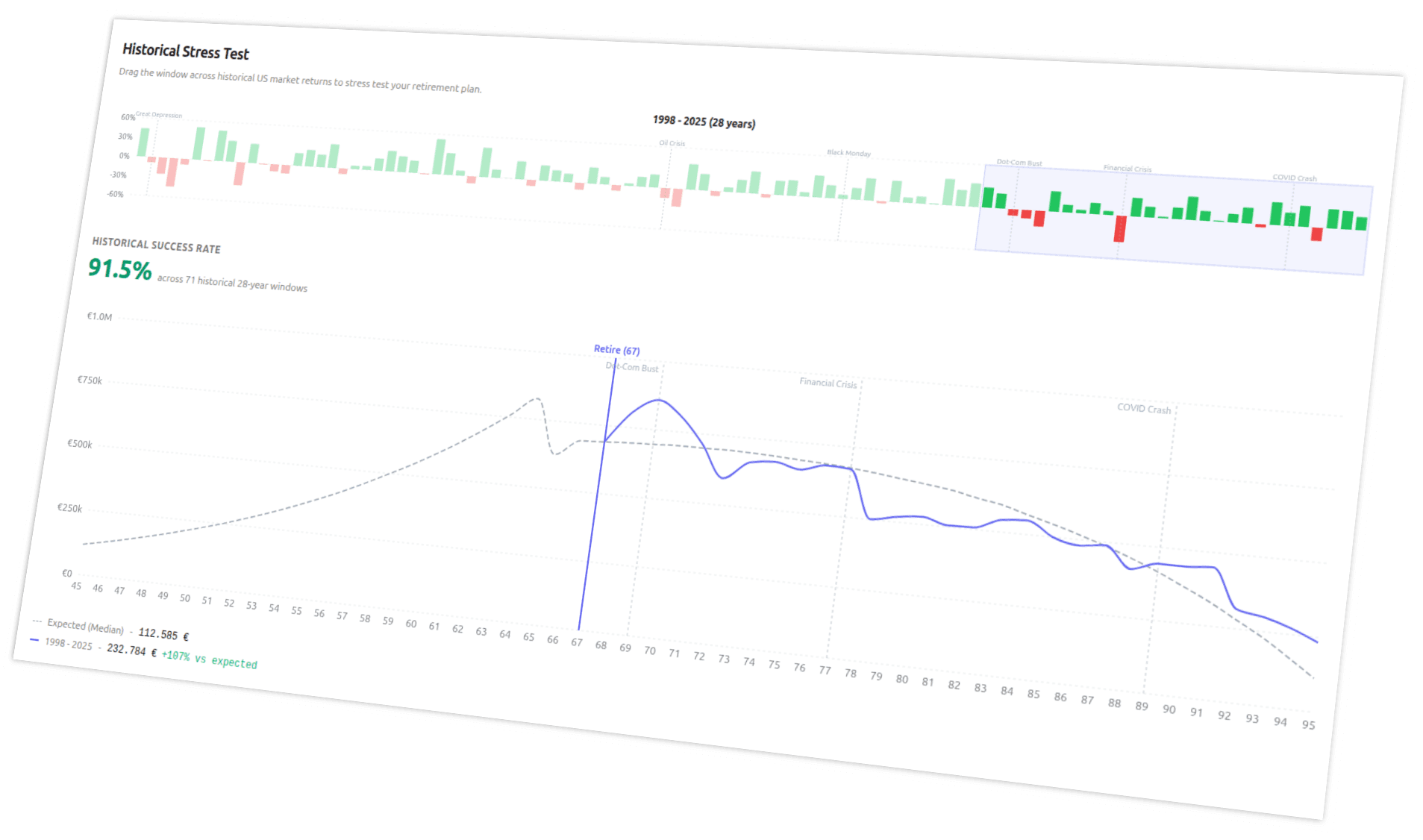
Test Your Plan Against 97 Years of Real Market Returns
The historical stress test runs your exact plan - spending strategy, income streams, allocation, tax settings - against every actual retirement window in the historical record. The window length matches your configured retirement duration. A 30-year retirement is tested against 1928-1958, then 1929-1959, then 1930-1960, and so on. When the record runs out before the window ends, the engine falls back to your configured expected returns for the remaining years.
Under the hood
Compare Two Scenarios Side by Side to Make Better Decisions
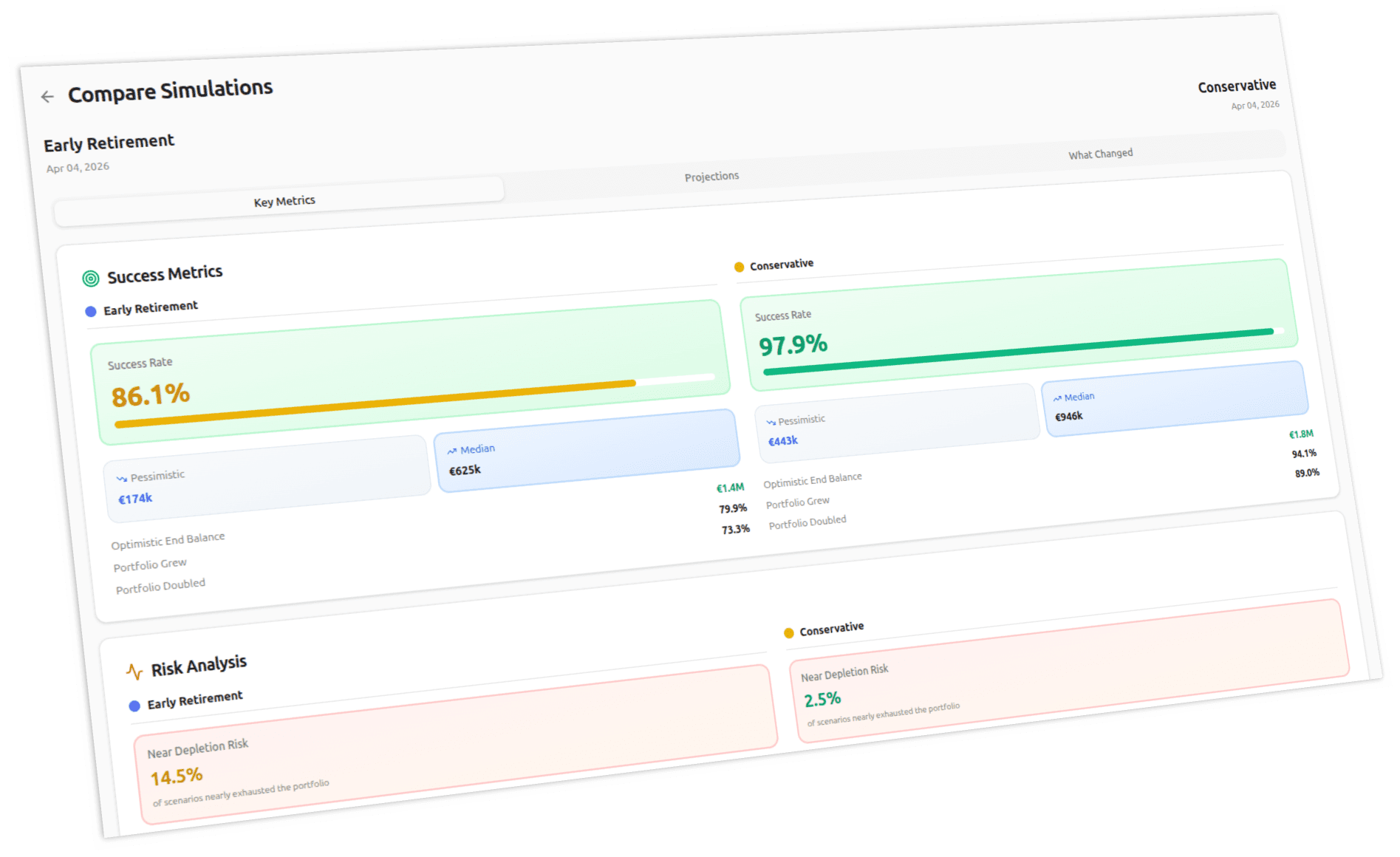
The value of a retirement decision - retiring two years earlier, shifting from 60/40 to 70/30, switching from fixed withdrawals to Guyton-Klinger - depends entirely on your specific inputs. Generic rules of thumb do not apply when your portfolio size, spending level, and income streams are all variables. Running both scenarios and comparing them gives you the actual number for your situation.
Under the hood